Limbs Removed Without Stressing the Canopy
Tree Trimming in Perry for overgrown branches threatening rooflines or blocking sunlight from landscape beds
Branches scraping shingles during wind, limbs drooping over driveways after rain, or canopies grown so dense that grass dies underneath signal that trimming is overdue. Perry Land and Tree provides tree trimming for residential and commercial properties in Perry, removing dead, damaged, or poorly positioned limbs while preserving the tree's natural structure and long-term health. Proper pruning cuts heal cleanly and redirect growth away from structures, utilities, and high-traffic areas without leaving stubs that invite decay.
Trimming involves selective removal rather than indiscriminate cutting—dead wood is removed first to eliminate breakage hazards, then crossing or rubbing limbs are addressed to prevent bark wounds, and finally weight is reduced on overextended branches that sag toward roofs or walkways. Cuts are made just outside the branch collar where the tree's natural healing response seals the wound fastest.
Schedule routine tree maintenance to address growth before branches become hazards or require emergency removal after storm damage.
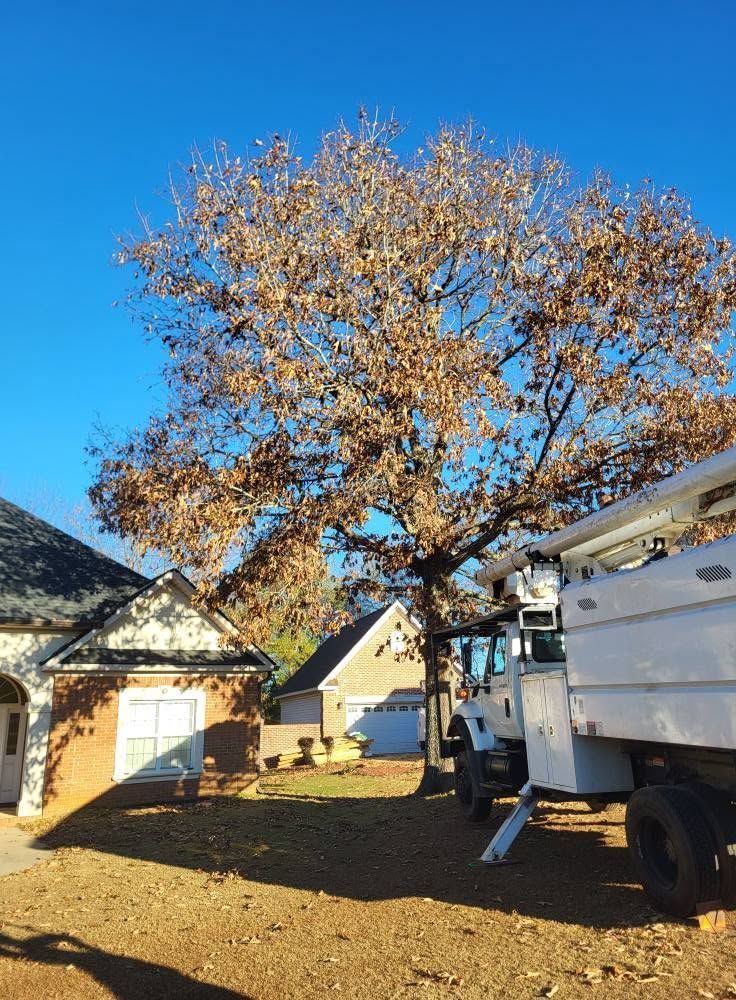
Pruning decisions depend on tree species, age, and current structure, with cuts timed to avoid stress during active growth periods for most hardwoods common in middle Georgia. Climbing or bucket truck access allows work on tall specimens, while hand saws and pole pruners maintain control over cut placement to avoid tearing bark or leaving ragged edges that slow healing.
After trimming, you'll see increased clearance between branches and structures, improved light penetration reaching turf and garden beds below, and elimination of the deadwood that crashed onto your property during previous storms. Airflow through the canopy improves as well, reducing humidity that promotes fungal growth and allowing wind to pass through rather than catching a dense crown that acts like a sail during severe weather.
Standard trimming services include removal of cut branches and debris, though they do not include treatment for disease or pest issues, cabling or bracing for split trunks, or root work to address structural instability. Those concerns are identified during the trimming assessment and addressed separately if needed.
Answers to Frequent Service Questions
Tree trimming is distinct from tree removal and involves decisions about how much to cut, where to make cuts, and when to schedule work for best results.
How much of the canopy can be removed without harming the tree?
Most healthy trees tolerate removal of up to 25 percent of the canopy in a single session, though stressed or declining trees should have less removed to avoid shock, and the specific percentage depends on species tolerance and current health assessed during the initial evaluation.
What's the difference between trimming and topping?
Trimming removes selected branches using cuts placed just outside the branch collar to encourage proper healing, while topping indiscriminately cuts main stems back to stubs that cannot seal properly, creating entry points for decay and forcing rapid, weakly attached regrowth that increases long-term hazards rather than reducing them.
When is the best time to schedule trimming in Perry?
Late winter before spring growth begins is ideal for most deciduous trees because wounds seal quickly once growth resumes, though dead or hazardous limbs should be removed immediately regardless of season, and storm-damaged branches are addressed as soon as access is safe.
Why does trimming cost vary between trees of similar size?
Cost depends on limb diameter, height requiring climbing or bucket access, proximity to power lines or structures that limit drop zones, and the amount of deadwood or tangled growth that slows the cutting process, so a tree with many small branches throughout the canopy takes longer than one with a few large limbs needing removal.
What should I look for to know if trimming was done correctly?
Proper cuts show no torn bark, no stubs extending beyond the branch collar, and no flush cuts into the trunk that remove the collar entirely—you should see a clean edge where the cut was made and a slight swelling at the collar where healing tissue will grow to cover the wound over the following months.
Regular trimming extends tree life and reduces the likelihood of costly emergency removals after limbs fail. Perry Land and Tree evaluates tree structure and growth patterns to determine which branches should be removed and which support the canopy's long-term health. Contact (478) 796-0350 to arrange an evaluation and receive a trimming plan tailored to your landscape.